Skip to content
TECH MANIAC
ALL WORK
Client engagementMENSWEAR RETAIL · COMMERCE

TOP LABEL

A commerce platform built around Cash on Delivery and phone-as-identity, and operated from a chat app.

LIVE · PUBLIC STOREFRONT

TOPLABEL.BD

COD-first

Order and email lifecycle

Chat-operated

Order desk runs from Telegram

8

Custom schema migrations

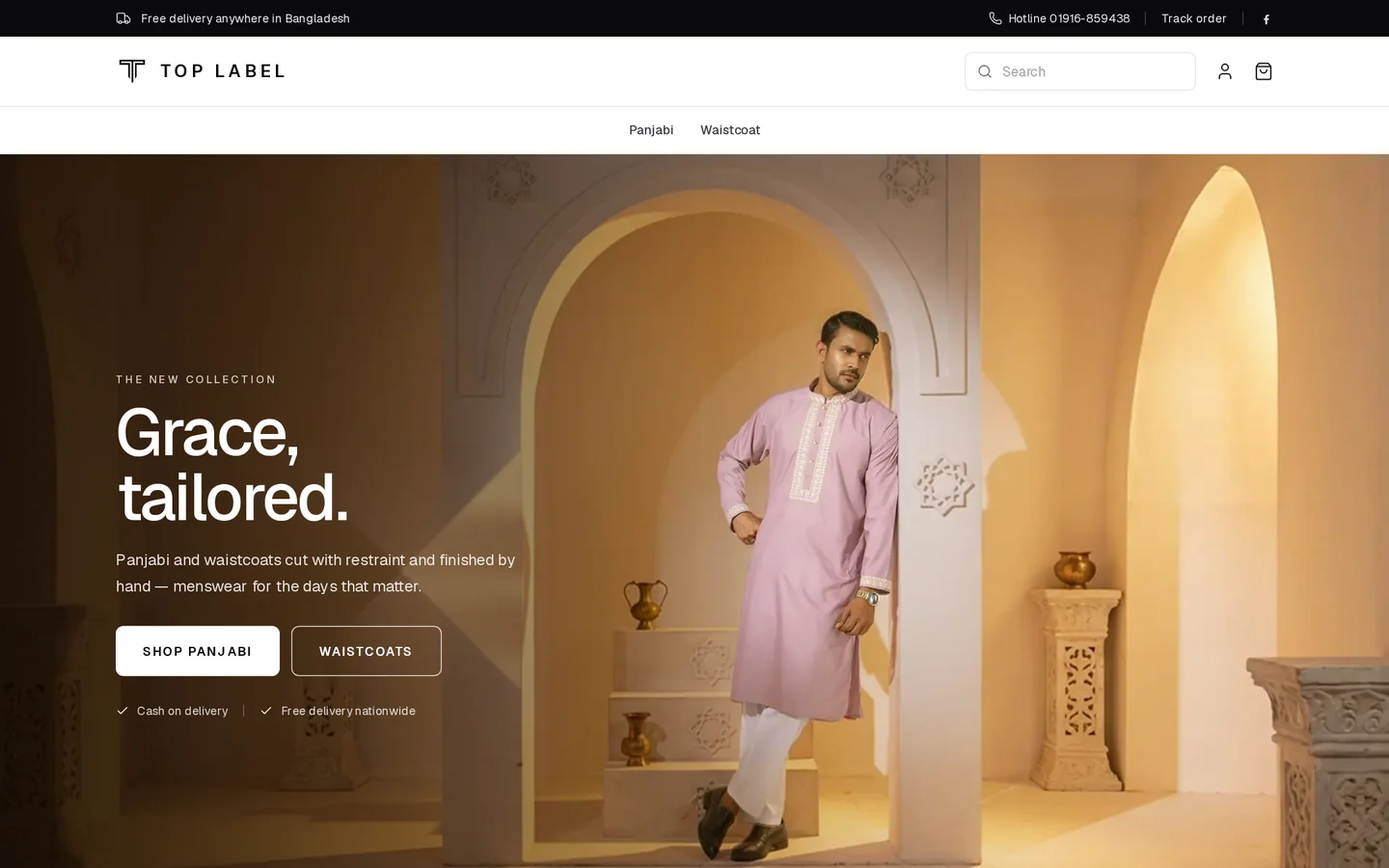
TOP LABEL — The storefront, live on toplabel.bd
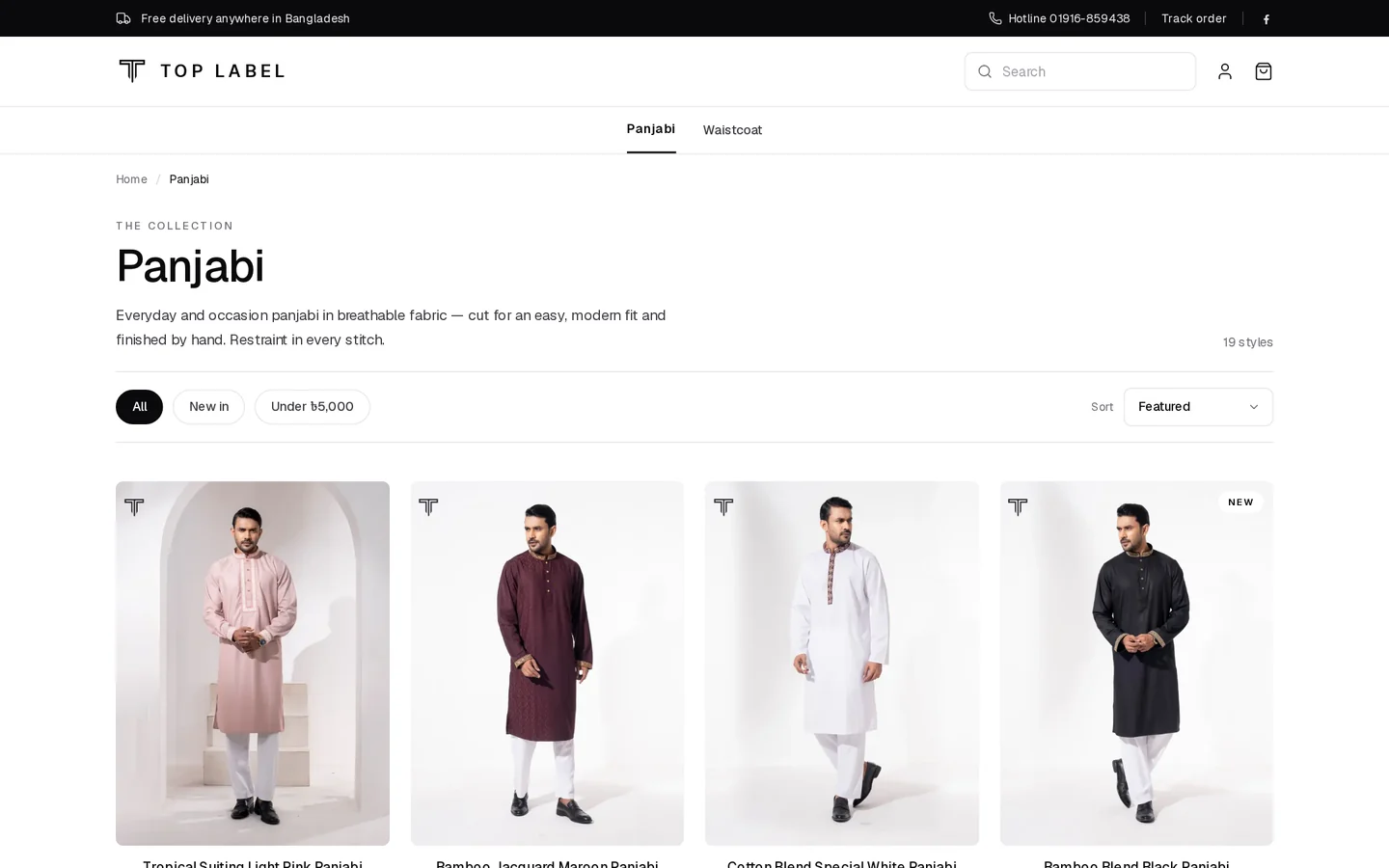
TOP LABEL — Collection page — filters, sort and price bands
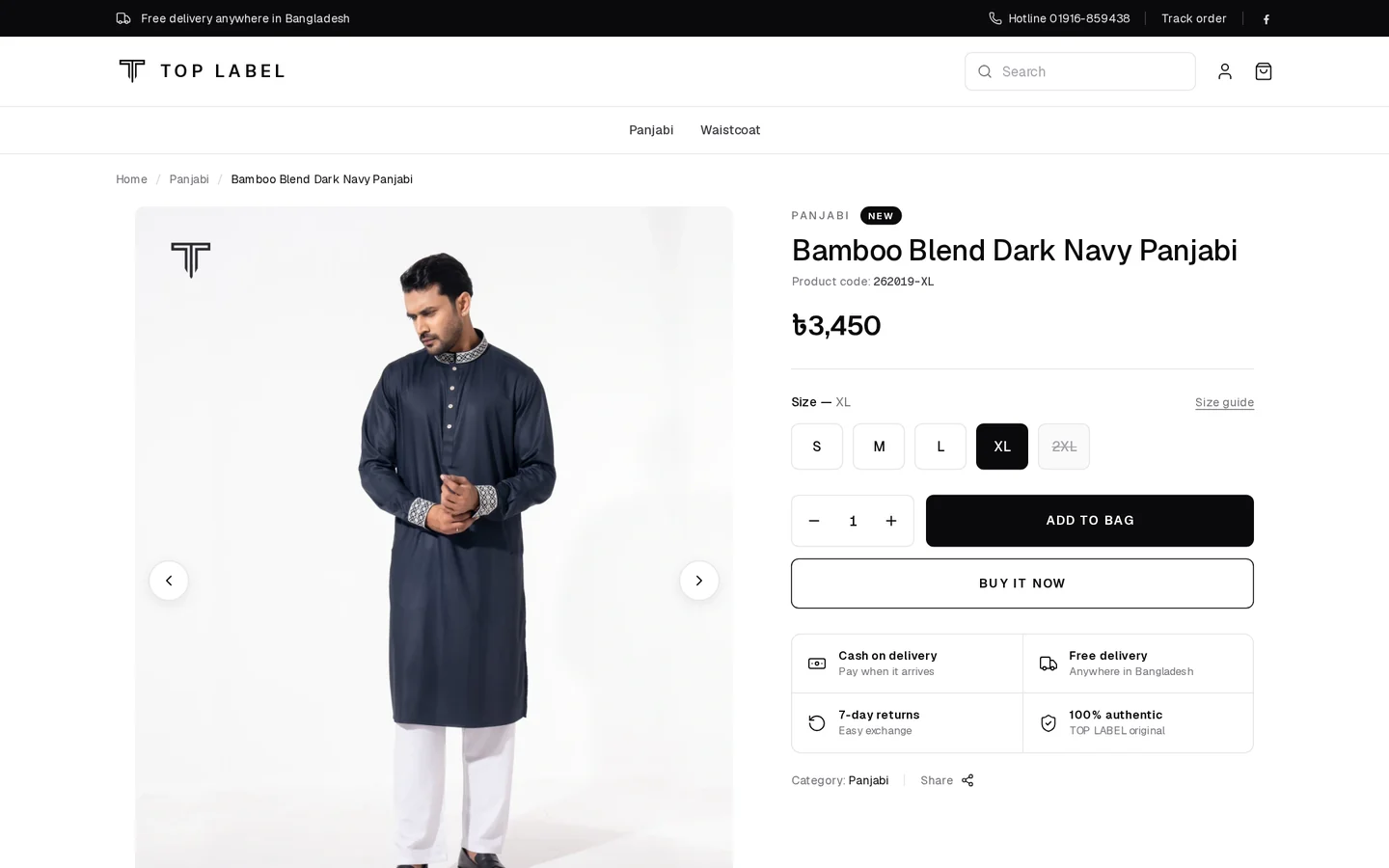
TOP LABEL — Product page — sizes, Cash on Delivery, free delivery
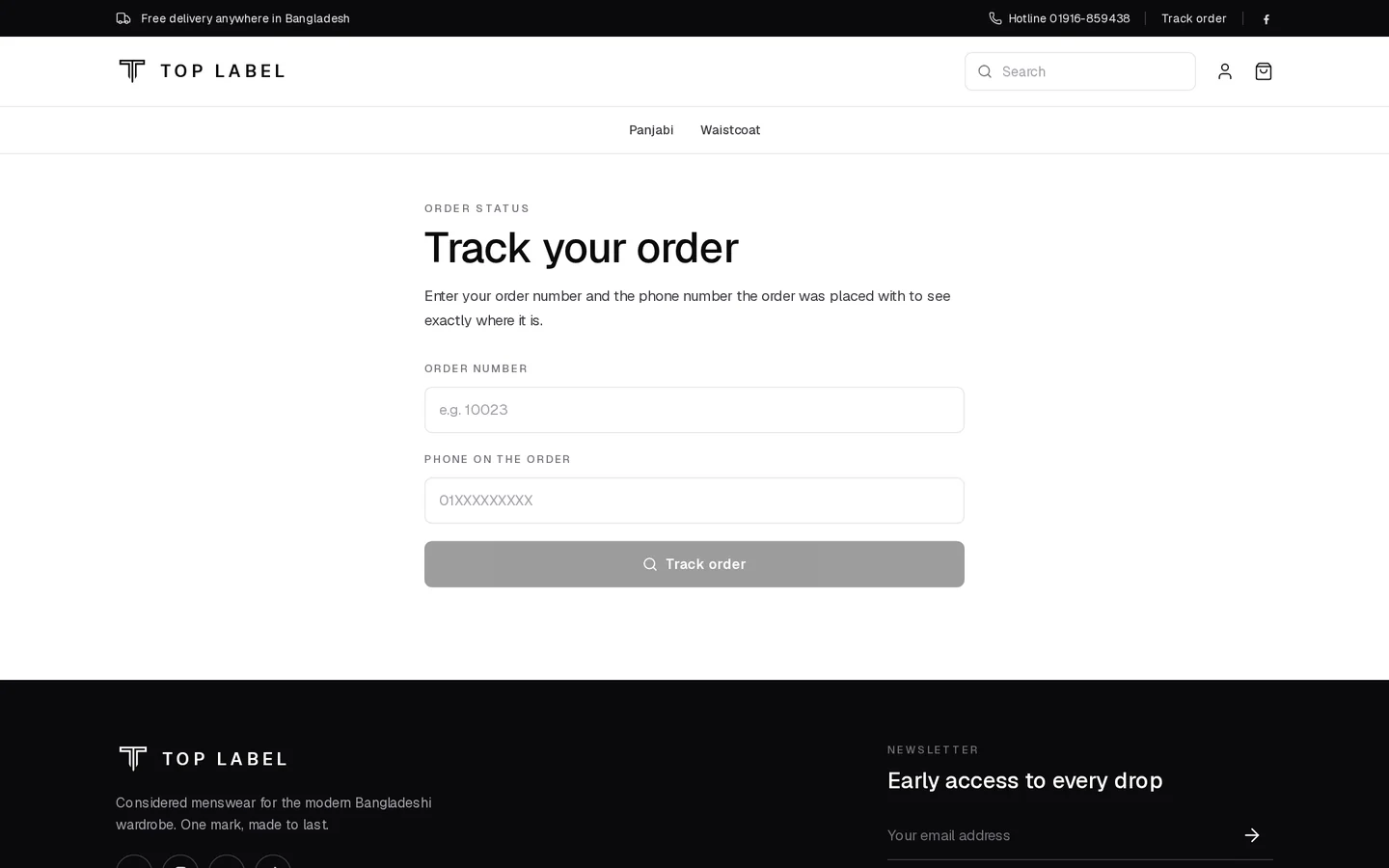
TOP LABEL — Order tracking — status only, never name or address

THE STOREFRONT, LIVE ON TOPLABEL.BD

THE PROBLEM

A menswear brand needed a storefront for a market where most orders are paid in cash at the door and most customers have a phone number but not an email address. Commerce platforms are built on the opposite assumptions — payment settles before dispatch, and email is the customer's identity.

Taken literally, that mismatch breaks the order lifecycle in a way that is easy to miss until it is live. The confirmation email fires when payment settles, which under Cash on Delivery is days later or never. Customers who gave only a phone number get emailed anyway, at an address that does not exist, damaging sender reputation with every attempt.

The second constraint was operational: the shop is run by people on their phones, not sitting at an admin dashboard.

WHAT WE BUILT

STOREFRONT

  • Cash-on-Delivery checkout with email optional
  • Customer accounts, Google sign-in, address book
  • Order tracking by code and phone number
  • On-site search, product galleries with lightbox zoom
  • Size guides resolved by size scale

OPERATIONS

  • Telegram order desk with inline approve, ship and deliver actions
  • COD-aware transactional email lifecycle
  • Product catalog feed for advertising
  • Owner-editable tracking script injection, no redeploy needed
  • Deploy script with verified automatic rollback

SHAPE OF IT

A commerce backend and a server-rendered storefront, both prerendered and edge-cached, with images served from object storage through a CDN. Only two API paths are exposed publicly, both third-party webhooks; everything else is reachable only from the storefront process. Requests that arrive without passing through the CDN are refused at the origin.

GETUPDATESSHOPPERbrowserCDNedge cacheNGINXorigin guardSTOREFRONTNext.js · ISRCOMMERCE APIVendurePOSTGRESWORKERsole pollerTELEGRAMorder deskOBJECT STOREimages
ONLY TWO API PATHS FACE THE INTERNET, BOTH THIRD-PARTY WEBHOOKS
ONE WAYBOTH WAYSPERIODIC
VendureNext.jsPostgreSQLTelegram APICloudflare Pages

DECISIONS THAT MATTERED

The parts that were not obvious.

01

The shop is operated from a group chat

Order state changes post to a Telegram group with Approve, Ship and Deliver buttons that drive real state transitions and trigger the customer emails. The staff already live in that app. Note the constraint it imposed: the chat API allows only one consumer of updates, so exactly one background process polls while the web process only posts — get that wrong and messages are silently consumed by the wrong worker.

02

The email lifecycle was rebuilt around cash payment

The stock confirmation email fires on payment settlement, which under Cash on Delivery arrives days after the customer wants reassurance, if at all. Replaced with emails on the three states a COD shopper actually cares about — received, shipped, delivered — each gated on the customer having supplied a deliverable address, so phone-only customers are never emailed into the void.

03

Order tracking cannot be used to confirm an order exists

Lookup takes an order code and a phone number and returns a status-only projection — never name, address or email. It answers identically for 'no such order' and 'wrong phone number', so it cannot be used to enumerate valid codes. Phone numbers are normalised so the same number in any local format compares equal. This was deliberately built as a separate query rather than by widening the existing one, which would have leaked the entire order to anyone holding just the code.

04

Size charts are bound to the size scale, not the product

Charts resolve by the name of the option group rather than per product, because the platform namespaces group codes per product so two identical scales never share one. The result is that a non-technical operator adding a product inherits the right measurements automatically, instead of the chart quietly being wrong or absent.

05

The admin dashboard is rebranded without touching vendor code

Rebranding is done entirely through published extension points — no modifications inside the dependency tree. Rewrites match on file content rather than filename, because build output is content-hashed and filenames change on every release. A build-time check asserts the branding actually landed. The alternative, patching vendor files directly, works until the next dependency install silently reverts it.

The shop is run by people on their phones, not sitting at an admin dashboard. So the order desk lives in the app they already use.

WHERE IT LANDED

  • Live, edge-cached, with automatic rollback proven on deploy failure.
  • The order desk runs from a phone, with no admin dashboard needed for day-to-day operations.
  • Eight custom schema migrations covering product specification fields, tracking settings and catalog metadata.
  • The catalog is built out and public: 25 photographed styles across panjabi and waistcoats, with search, filters and order tracking all live.